Parking structures are one of the first things visitors see when they arrive at a property. Whether it is an office building, apartment complex, retail center, or medical facility, the condition of the parking garage influences the overall impression of the property.
Proper parking garage cleaning plays an important role in maintaining a professional environment. Dirt, oil stains, tire marks, and debris accumulate quickly in these high traffic spaces. Without regular cleaning, the structure can begin to look neglected and may even develop safety hazards.
From years of working in exterior cleaning, one thing becomes clear quickly. Parking structures that follow a consistent maintenance routine stay cleaner longer, experience less surface damage, and create a much better experience for visitors and tenants.
This guide explains practical cleaning strategies, professional insights, and maintenance practices that help property owners keep their garages clean, safe, and presentable.
Why Parking Garage Cleanliness Matters for Commercial Properties
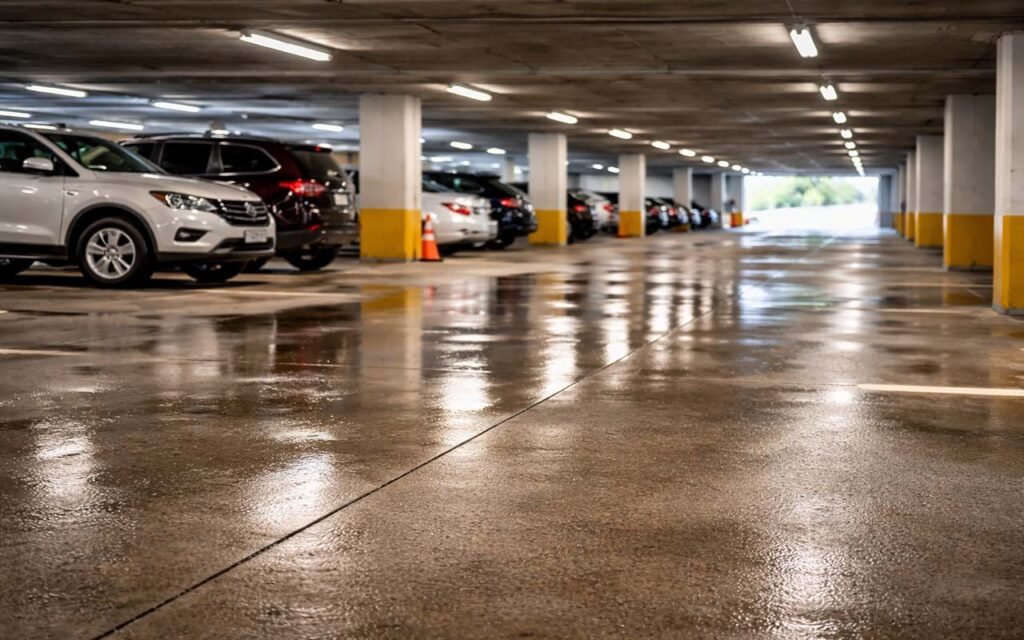
A clean parking facility does more than improve appearance. It also protects the structural materials and contributes to a safer environment for drivers and pedestrians.
Parking structures collect contaminants every day such as vehicle fluids, dust, brake residue, and trash. When these materials remain on the surface for long periods, they can damage concrete and create slippery conditions.
Well maintained garages offer several important benefits.
Key advantages of regular cleaning
- Improved first impression for visitors and customers
- Reduced slip hazards caused by oil and grime buildup
- Longer lifespan of concrete surfaces
- Better lighting visibility in the garage
- Lower long term repair costs
According to facility management studies published by the International Parking and Mobility Institute, regular cleaning can significantly reduce deterioration in parking structures and extend their service life.
In other words, keeping the garage clean is not only about aesthetics. It is also a form of preventative maintenance.
Common Problems Found in Parking Garages
Parking garages experience constant vehicle traffic, which means contaminants accumulate quickly. Understanding the most common issues helps property managers address them before they become serious problems.
Oil and Fluid Stains
Motor oil, transmission fluid, and brake fluid frequently leak from vehicles. These substances soak into concrete surfaces and leave dark stains that are difficult to remove if ignored.
Over time, oil residue can weaken concrete and create slippery areas that increase liability risks.
Tire Marks and Rubber Buildup
Vehicles turning and braking in tight spaces often leave rubber marks. These marks can accumulate quickly in ramps and turning areas.
Without proper cleaning, rubber buildup can make surfaces look dirty even when the rest of the garage appears maintained.
Dust and Debris Accumulation
Wind, traffic movement, and open ventilation allow dust and debris to enter garages continuously. This material collects in corners, along curbs, and near drains.
If left unattended, debris can clog drainage systems and contribute to standing water problems.
Mold and Moisture Issues
Garages with poor airflow or drainage can develop moisture buildup. This environment allows mold, mildew, and algae to grow on surfaces, particularly in shaded areas.
Regular cleaning helps prevent these conditions from spreading.
Recommended Parking Garage Cleaning Schedule
Cleaning frequency depends on traffic levels and property type. High traffic facilities often require more frequent maintenance.
The following table provides a general guideline used by many commercial property managers.
| Cleaning Task | Recommended Frequency | Purpose |
|---|---|---|
| Surface sweeping | Weekly | Remove debris and dust buildup |
| Spot stain removal | Monthly | Prevent permanent oil staining |
| Pressure washing | Every 3 to 6 months | Remove deep grime and tire marks |
| Drain cleaning | Quarterly | Prevent water pooling |
| Full deep cleaning | Annually | Restore overall surface condition |
Garages with heavy vehicle usage such as shopping centers or hospitals may require professional cleaning more often.
Best Cleaning Methods for Parking Structures
Not every surface in a parking garage should be cleaned the same way. Choosing the correct method is essential to avoid surface damage.
High Pressure Surface Cleaning
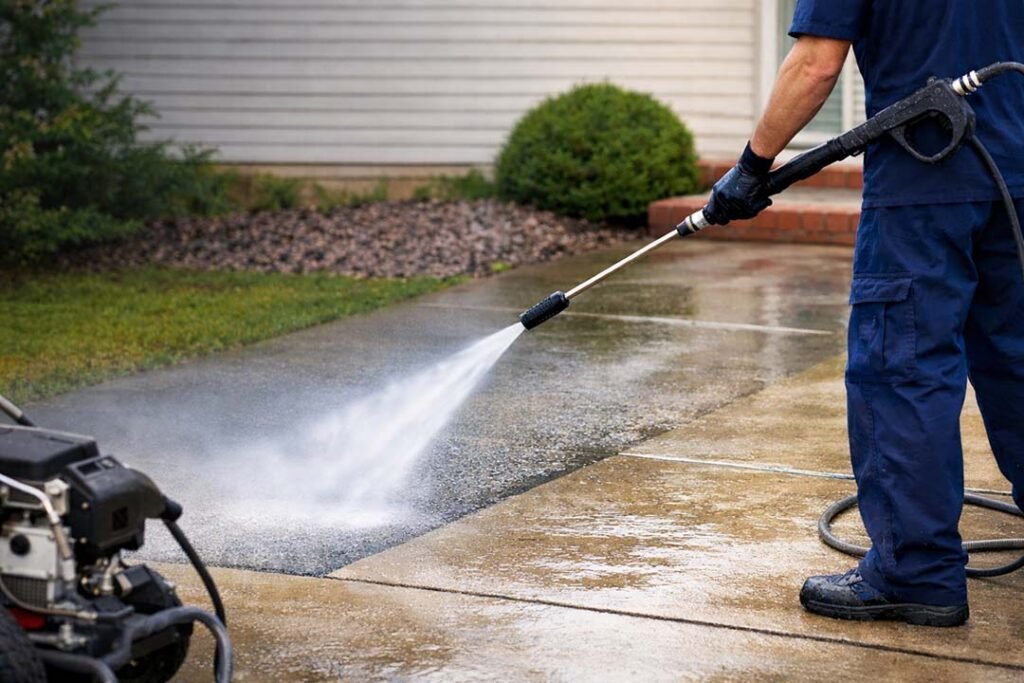
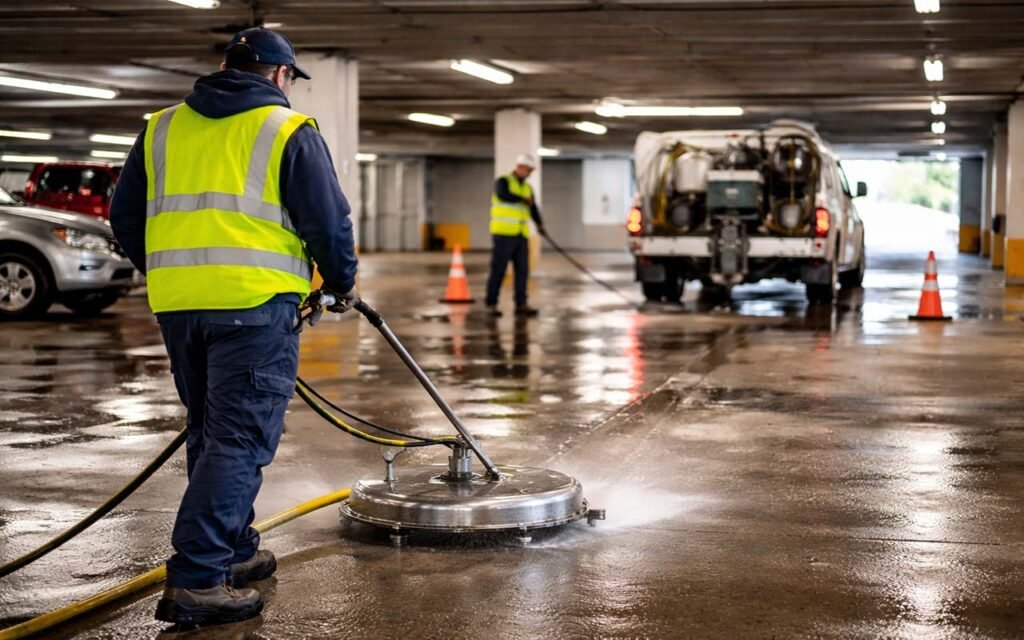
Professional pressure washing equipment is one of the most effective ways to clean concrete parking structures.
Specialized surface cleaners allow technicians to remove:
- Oil residue
- Tire marks
- Dirt accumulation
- Salt and chemical buildup
The key is using the correct pressure level and cleaning solution. Too much pressure can damage the concrete surface.
From field experience, a balanced approach using moderate pressure with a degreasing solution produces the best results.
Degreasing Treatments
Oil stains often require a chemical degreasing treatment before washing. These products break down petroleum residue so it can be removed during pressure washing.
Professional cleaners typically apply degreasers to stained areas and allow them to dwell before rinsing.
This process improves cleaning efficiency and prevents stains from reappearing.
Mechanical Sweeping
Before any washing process begins, sweeping the garage is essential. Removing loose debris ensures the cleaning equipment can focus on deeper contaminants.
Mechanical sweepers are often used in larger facilities to cover large areas quickly.
Sweeping also prevents debris from clogging drains during washing.
Real World Cleaning Insight from Professional Contractors
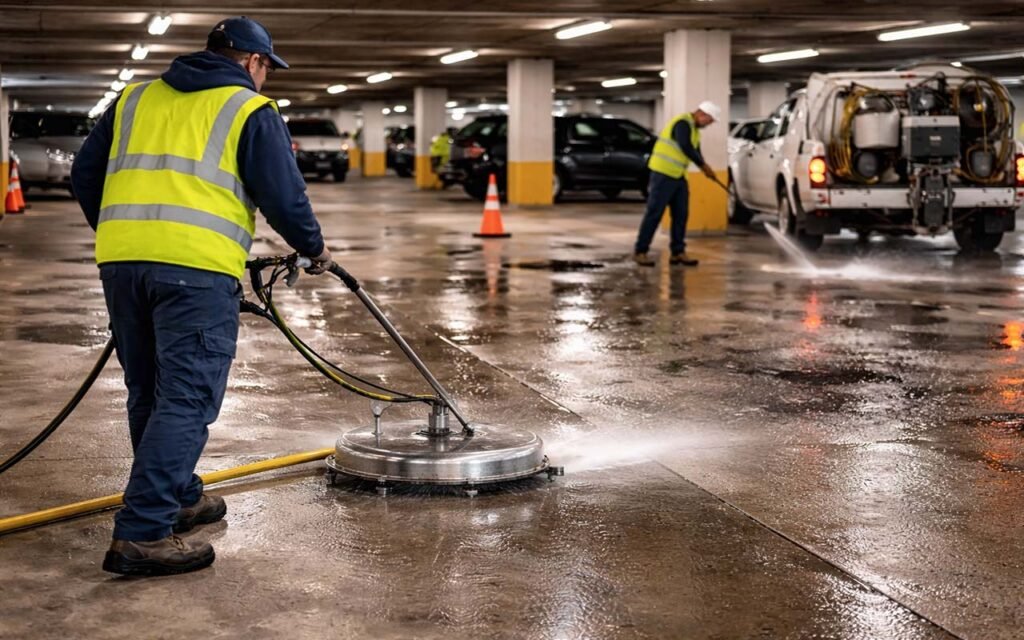
One observation that comes up repeatedly during garage cleaning projects is how quickly neglected structures deteriorate.
When garages go years without proper cleaning, oil and contaminants penetrate deep into the concrete. At that stage, even professional pressure washing may not fully restore the surface.
However, garages that receive routine cleaning often maintain their appearance for many years.
In several commercial properties we have serviced, regular cleaning reduced visible staining by more than 70 percent within the first year of scheduled maintenance.
The lesson is simple. Consistency matters more than occasional deep cleaning.
Safety Considerations During Garage Cleaning
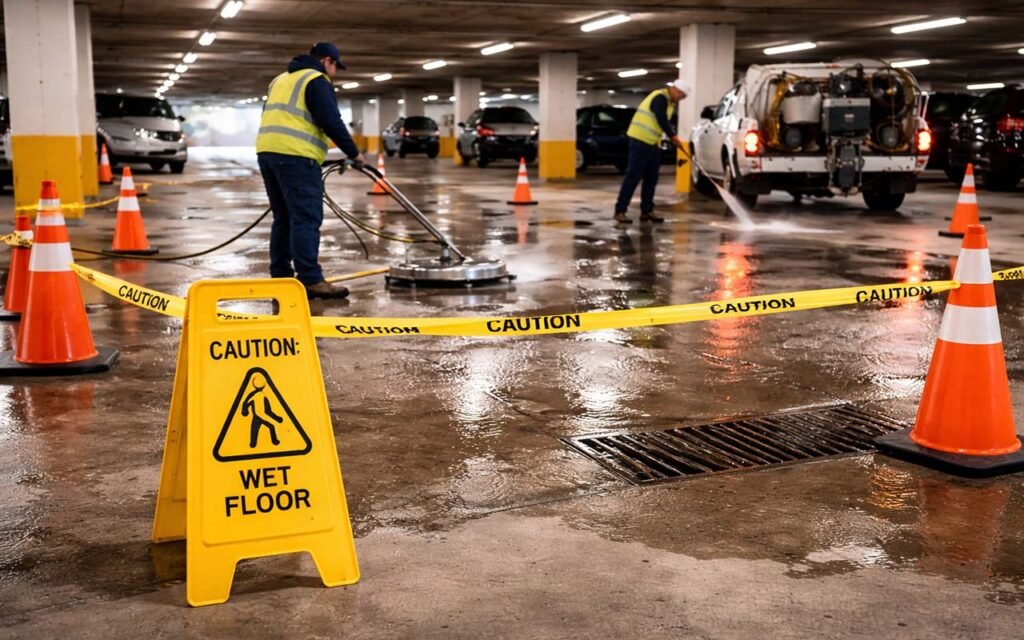
Cleaning a parking structure involves several safety concerns that must be addressed before work begins.
Professional crews typically follow strict procedures to protect both workers and property users.
Important safety practices include
- Temporarily blocking off work zones
- Using slip resistant cleaning techniques
- Managing water runoff properly
- Ensuring proper ventilation during cleaning
- Posting warning signs for drivers and pedestrians
According to research published by the Occupational Safety and Health Administration, wet surfaces are one of the leading causes of workplace slips and falls.
Professional cleaning companies use controlled washing techniques to reduce these risks.
Environmental Considerations in Garage Cleaning
Parking garages often connect to storm drainage systems. Because of this, cleaning must be performed responsibly to avoid environmental contamination.
Oil residue and chemical runoff can enter local water systems if not managed properly.
Responsible cleaning contractors use methods that capture or redirect wastewater when possible.
Environmentally responsible practices
- Using biodegradable cleaning solutions
- Controlling water runoff during washing
- Removing heavy oil contamination safely
- Avoiding excessive chemical usage
These practices protect both the environment and the property owner from potential compliance issues.
How Professional Cleaning Improves Property Value

A clean parking garage contributes to the overall perception of the property. This can directly influence tenant satisfaction and customer experience.
When visitors enter a clean, well maintained garage, they associate that cleanliness with the rest of the property.
Property managers often notice that improved parking area conditions lead to:
- Better tenant retention
- Increased customer confidence
- Higher perceived property value
For retail and commercial buildings, these factors can influence business success.
Maintaining clean parking facilities is part of a broader property management strategy.
Signs Your Garage Needs Professional Cleaning
Some signs indicate that a parking structure may require professional cleaning services.
Common indicators include
- Strong oil odors in enclosed areas
- Large visible oil stains across parking spaces
- Accumulated dirt along walls and ramps
- Standing water near drainage areas
- Poor lighting visibility due to grime on surfaces
Addressing these issues early prevents more expensive restoration work later.
Parking Garage Cleaning Compared with Basic Pressure Washing
Although pressure washing is an important part of garage maintenance, parking structures usually require a more specialized approach. Large commercial garages experience heavy traffic, oil leaks, tire residue, and constant dust buildup. Because of this, different cleaning methods are often combined to achieve the best results.
The comparison below highlights how basic pressure washing differs from professional garage cleaning approaches.
| Cleaning Type | Equipment Used | Cleaning Depth | Typical Application |
|---|---|---|---|
| Basic pressure washing | Standard pressure washer | Surface level dirt removal | Small residential driveways and patios |
| Professional parking garage cleaning | Surface cleaners, degreasers, commercial pressure equipment | Deep removal of oil stains, tire marks, and grime | Commercial parking structures and multi level garages |
| Mechanical sweeping | Industrial sweepers and vacuum systems | Removal of loose debris and dust | Large garages, ramps, and high traffic parking areas |
Professional cleaning services often combine these methods during the same project. Sweeping removes loose debris first, degreasers break down oil contamination, and pressure washing completes the deep cleaning process. This layered approach produces a more consistent and longer lasting result for commercial parking facilities.
Long Term Maintenance Tips for Property Managers
Maintaining a clean parking structure does not require constant deep cleaning. A combination of small maintenance steps can keep the facility in excellent condition between professional services.
Practical maintenance tips
- Schedule routine sweeping to remove dust and debris
- Address oil spills immediately before they spread
- Inspect drains regularly for blockage
- Monitor high traffic turning areas for rubber buildup
- Maintain good lighting to highlight cleaning issues early
These steps help reduce heavy buildup that later requires more aggressive cleaning.
Professional Parking Garage Cleaning Services
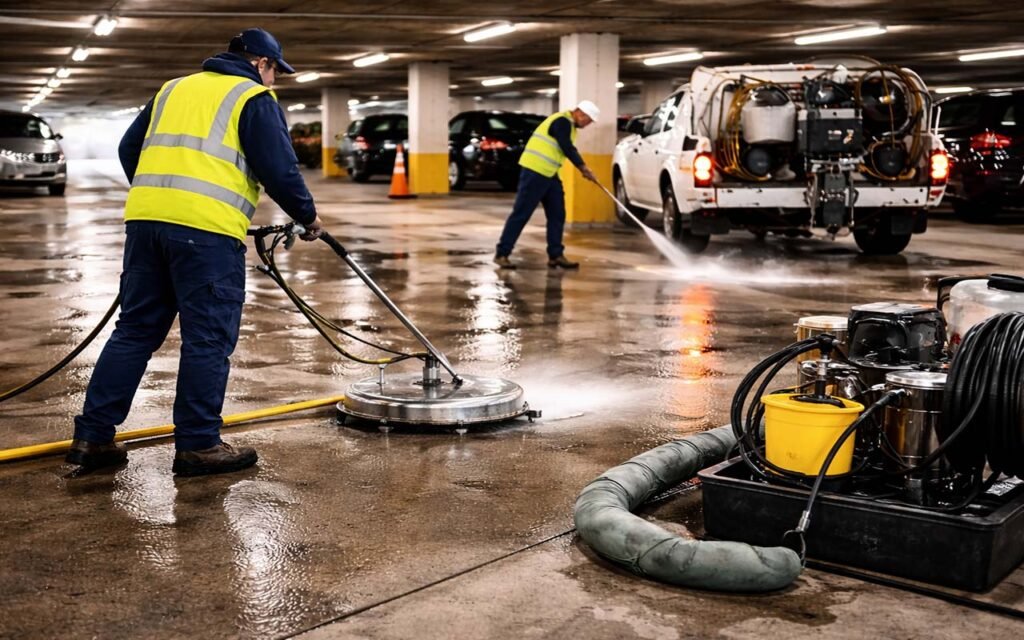
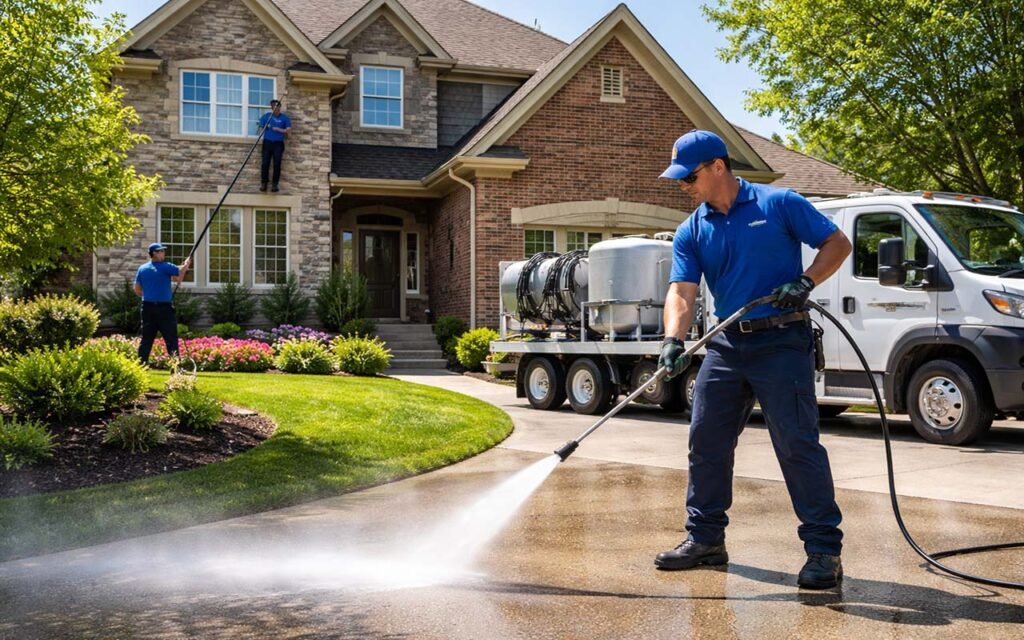
While some property managers attempt basic cleaning in house, professional cleaning companies provide specialized equipment and expertise that produces better results.
Professional technicians understand how to adjust cleaning pressure, select appropriate degreasers, and manage water runoff safely.
This experience protects concrete surfaces while achieving a much deeper clean.
Commercial cleaning services also complete the job faster, reducing disruption to tenants and visitors.
615softwash provide professional parking lot and parking garage cleaning service in Nashville. Routine cleaning prevents buildup that later requires costly restoration work.
Related Exterior Cleaning Resources
Maintaining clean exterior surfaces goes beyond parking areas. Many commercial properties benefit from a complete exterior cleaning strategy.
You may also find these topics helpful.
Explore more professional cleaning insights from the 615 Softwash blog to learn how proper exterior maintenance protects your property and improves curb appeal.
Frequently Asked Questions
How often should a parking garage be cleaned?
Most commercial properties benefit from professional parking garage cleaning every three to six months. High traffic locations such as shopping centers, hospitals, and office buildings may require more frequent service. Regular cleaning helps remove oil stains, debris, and tire marks before they cause long term surface damage.
What is the best method for cleaning a parking garage?
The most effective approach usually combines mechanical sweeping, degreasing treatments, and professional pressure washing. Sweeping removes loose debris first, degreasers break down oil contamination, and pressure washing removes deep grime from concrete surfaces.
Can oil stains be removed from parking garage concrete?
Yes, most oil stains can be reduced or removed using commercial degreasing solutions followed by professional pressure washing. The sooner the stain is treated, the better the results. Older stains that have soaked into concrete may require repeated treatment.
Is parking garage cleaning necessary for safety?
Cleaning helps reduce slip hazards caused by oil residue, algae growth, and accumulated debris. Maintaining clean surfaces improves traction for both vehicles and pedestrians while also improving visibility inside the garage.
Should property managers hire professionals for garage cleaning?
Large parking structures typically require specialized equipment and experience to clean safely and efficiently. Professional parking garage cleaning services use commercial grade equipment and cleaning solutions that remove heavy buildup without damaging the concrete surface.
Final Thoughts
Parking structures experience heavy daily use. Dirt, oil residue, and debris are unavoidable in these environments. However, regular maintenance and proper cleaning methods can keep garages looking professional and functioning safely.
Effective parking garage cleaning removes contaminants that damage concrete, improves visibility and safety, and creates a better experience for property visitors.
With consistent care, property managers can extend the lifespan of the structure while maintaining a clean and welcoming environment for tenants and guests.
Investing in routine cleaning is one of the simplest ways to protect the value and reputation of any commercial property.