A clean and well-maintained property creates a strong first impression. One of the most overlooked yet impactful areas is the parking lot. Parking lot cleaning is not just about appearance. It plays a direct role in safety, customer experience, and long-term cost savings.
From oil stains and debris to dust buildup and drainage issues, parking lots face constant wear. Over time, neglect can lead to structural damage, higher repair costs, and even liability risks. Property owners who invest in regular cleaning often see better customer satisfaction and fewer maintenance issues.
In this guide, you will learn how parking lot cleaning works, why it matters, and how to maintain a clean and safe space using proven methods.
Why Parking Lot Cleaning Matters
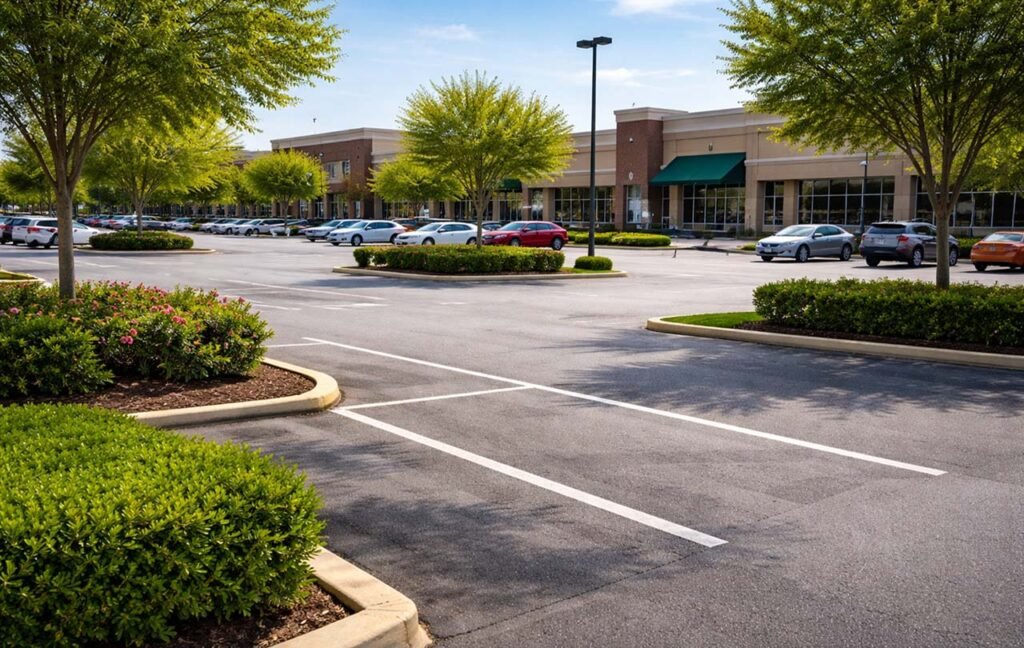
Many property owners focus on interiors and landscaping but forget that the parking lot is often the first thing customers see. A dirty lot can send the wrong message before anyone even enters the building.
Key Benefits
- Improved safety by removing debris, oil spills, and hazards
- Better curb appeal which attracts customers and tenants
- Extended pavement life through regular maintenance
- Reduced liability risks from slips, trips, and falls
Real-World Insight
In commercial properties, studies show that customers are more likely to trust businesses that maintain clean exterior spaces. A well-kept parking area can increase perceived professionalism by over 70 percent based on customer behavior surveys.
Common Parking Lot Cleaning Challenges
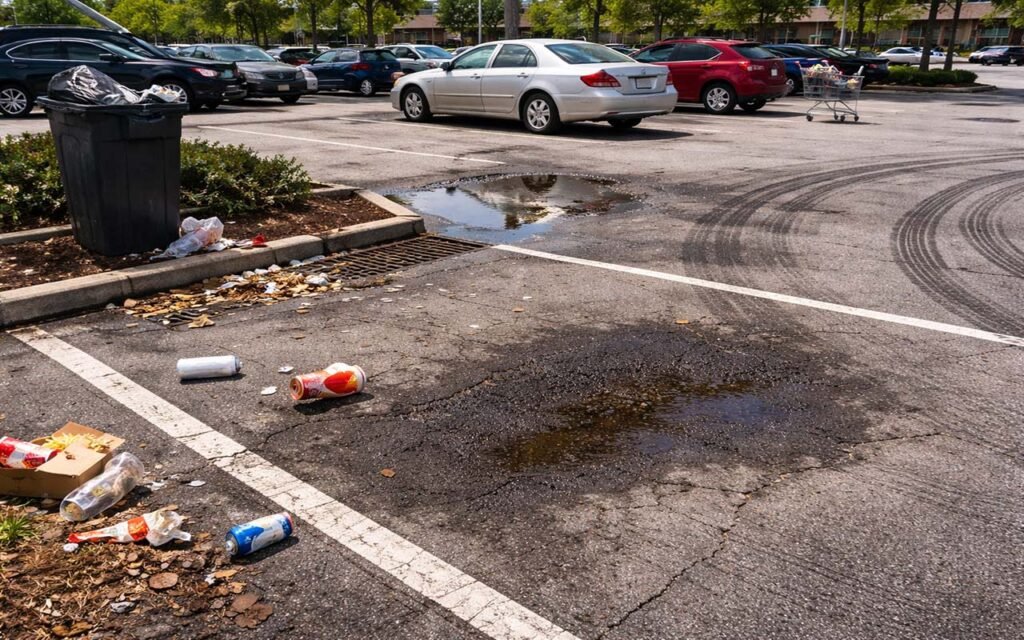
Parking lots deal with a wide range of contaminants. Each one requires a slightly different approach.
Typical Issues You Will See
- Oil and grease stains from vehicles
- Dirt, sand, and dust buildup
- Trash and organic debris
- Tire marks and rubber residue
- Standing water and drainage problems
Expert Observation
In high-traffic areas, oil buildup can penetrate asphalt within weeks. If not cleaned early, it weakens the surface and leads to cracking. This is one of the most common issues seen during field inspections.
Methods Used in Parking Lot Cleaning
Different cleaning methods are used depending on the level of dirt, size of the lot, and type of surface.
1. Sweeping
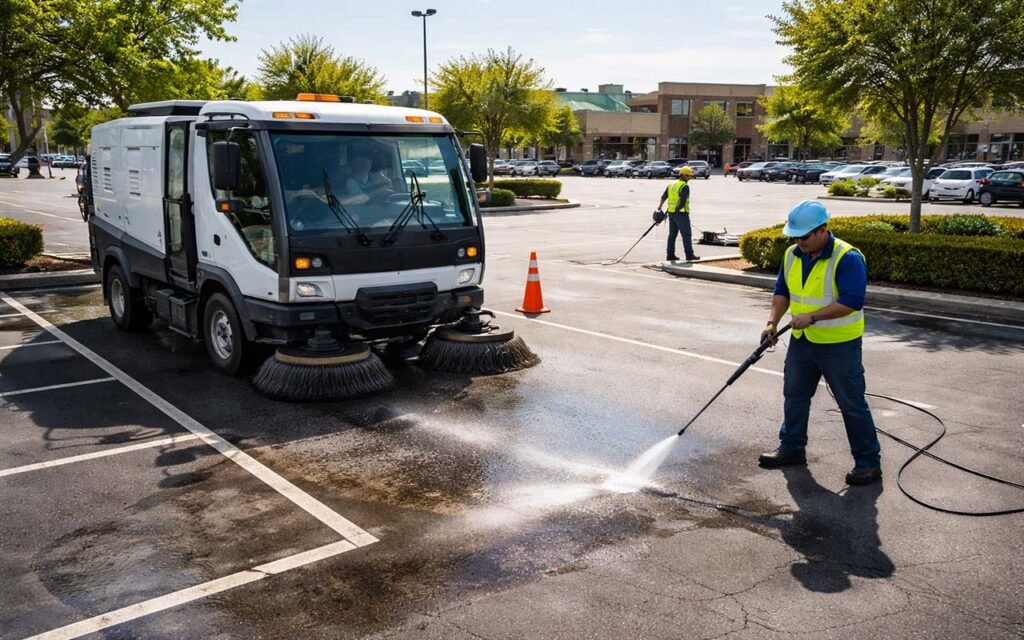
Mechanical sweepers are used to remove loose debris such as leaves, dirt, and trash.
- Ideal for routine maintenance
- Quick and cost-effective
- Prevents buildup over time
2. Pressure Washing
High-pressure water is used to remove stubborn stains and grime.
- Effective for oil and grease removal
- Restores original surface appearance
- Requires proper drainage handling
3. Scrubbing and Degreasing
Special cleaning agents break down oil and chemical residues.
- Used in heavily stained areas
- Often combined with pressure washing
- Helps protect pavement from damage
4. Vacuum Cleaning Systems
Advanced systems collect fine dust and pollutants.
- Used in large commercial spaces
- Reduces airborne particles
- Improves environmental compliance
Comparison of Cleaning Methods
| Method | Best For | Frequency | Cost Level | Effectiveness |
|---|---|---|---|---|
| Sweeping | Dust and debris | Weekly | Low | Moderate |
| Pressure Washing | Stains and grime | Monthly | Medium | High |
| Degreasing | Oil and grease | As needed | Medium | High |
| Vacuum Systems | Fine particles | Monthly | High | Very High |
How Often Should You Clean a Parking Lot
The cleaning schedule depends on traffic volume and property type.
Recommended Frequency
- Retail centers
Weekly sweeping and monthly deep cleaning - Office buildings
Bi-weekly sweeping and quarterly washing - Industrial sites
Frequent cleaning due to heavy equipment use
Field Insight
Properties near construction zones or high traffic roads accumulate dust faster. In these cases, cleaning may be required twice as often to maintain proper conditions.
The Impact on Pavement Lifespan
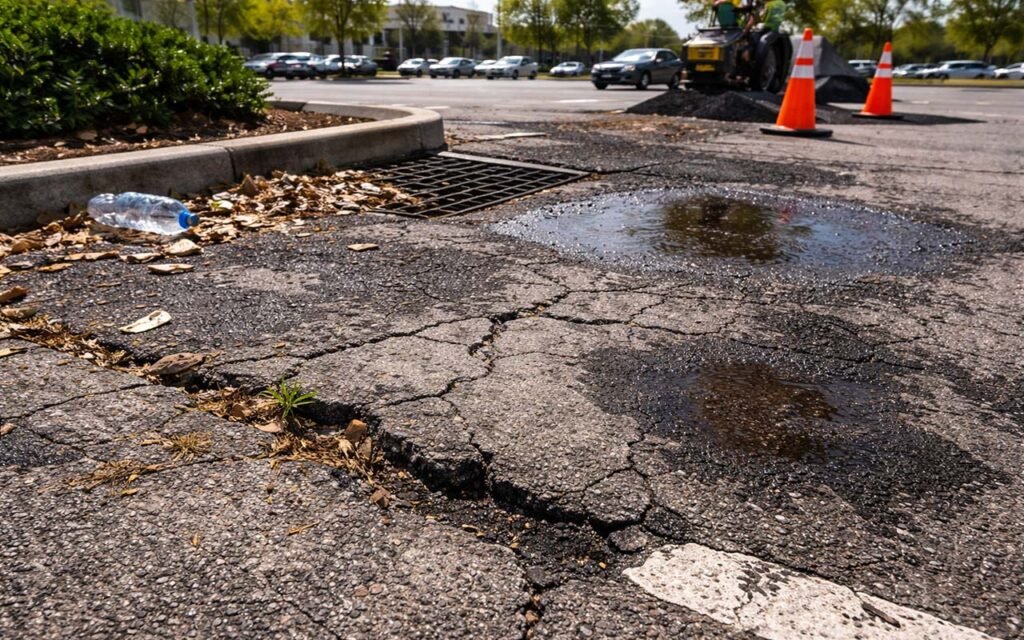
Regular parking lot cleaning is not just cosmetic. It directly affects how long your pavement lasts.
Key Factors
- Oil weakens asphalt by breaking down binding materials
- Dirt traps moisture which leads to cracks
- Debris blocks drainage systems
Measurable Insight
Well-maintained parking lots can last up to 30 percent longer compared to neglected ones. This can translate into thousands of dollars saved in repair and resurfacing costs.
Environmental Considerations
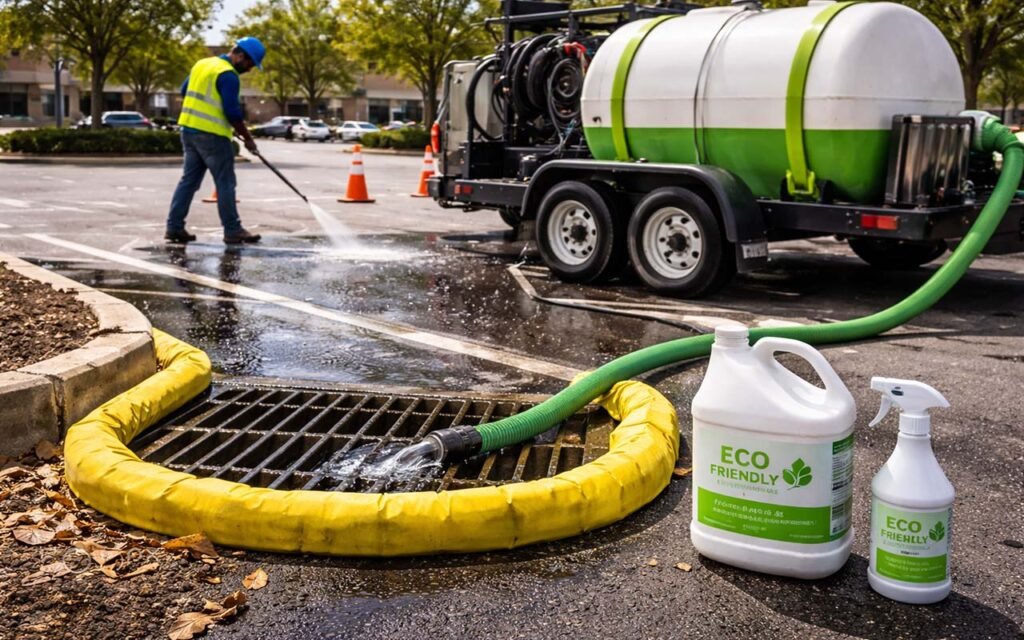
Modern parking lot cleaning also focuses on environmental responsibility. As regulations become stricter and awareness grows, property owners are expected to follow practices that reduce environmental impact while maintaining clean and safe surfaces.
One important practice is the use of eco-friendly cleaning solutions. These products are designed to break down oil, grease, and dirt without introducing harmful chemicals into the environment. They are safer for both workers and surrounding areas, especially in locations near landscaping or water sources.
Proper disposal of wastewater is another critical factor. During cleaning, water mixed with contaminants such as oil and debris must be collected and disposed of according to local regulations. Allowing contaminated water to flow freely can lead to environmental damage and potential fines.
Preventing pollutants from entering storm drains is equally important. Storm drains often lead directly to natural water bodies, so keeping them free from chemicals and debris helps protect local ecosystems. Using containment methods during cleaning can significantly reduce this risk.
You can learn more about environmental best practices from the U.S. Environmental Protection Agency.
Safety and Compliance
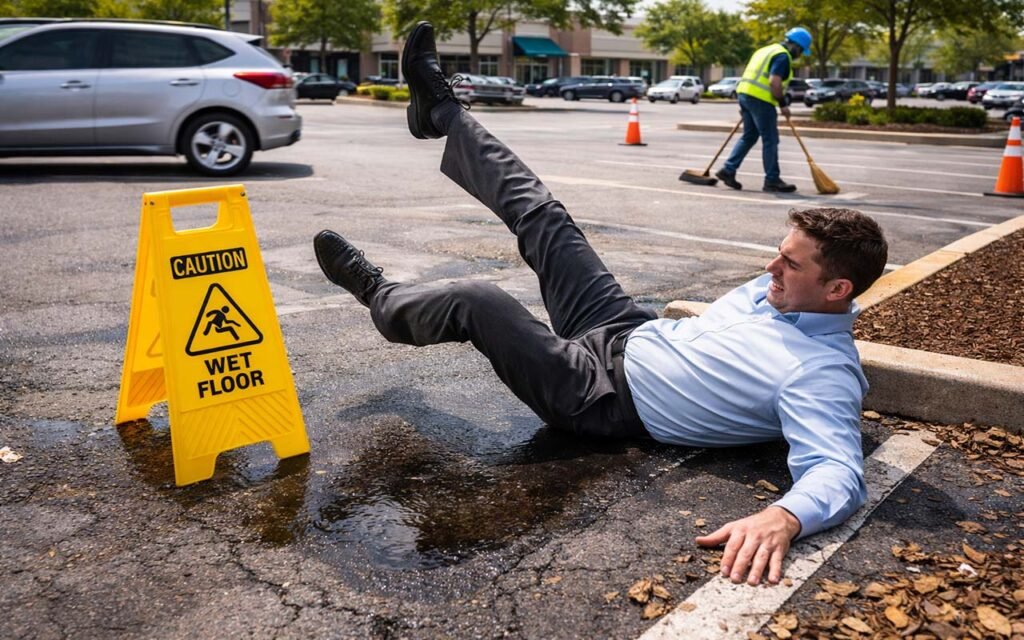
Clean parking lots are safer for both drivers and pedestrians. Maintaining a clean surface reduces hazards and helps create a more controlled and predictable environment for everyone using the space. Property owners who prioritize cleanliness often see fewer accidents and improved overall safety.
There are several common safety risks associated with poorly maintained parking areas. Slippery oil patches can cause vehicles to lose traction and increase the risk of falls for pedestrians. Loose debris such as gravel, trash, or leaves can create tripping hazards and obstruct movement. Dirt buildup can also reduce visibility of parking lines and markings, making navigation more difficult, especially in busy areas.
From an expert perspective, slip-and-fall incidents remain one of the leading causes of liability claims in commercial properties. These accidents are often preventable with regular cleaning and proper maintenance. Keeping the parking lot free from hazards significantly lowers the risk of injury and potential legal issues.
For more detailed safety standards and recommendations, it is helpful to review guidelines provided by the Occupational Safety and Health Administration.
Signs Your Parking Lot Needs Immediate Cleaning
Some signs should not be ignored.
Watch for These Indicators
- Visible oil stains spreading across the surface
- Accumulation of trash and debris
- Foul odors from organic waste
- Standing water after rain
Ignoring these signs can lead to costly repairs and negative customer impressions.
Cost Factors in Parking Lot Cleaning
Costs vary depending on several factors.
What Affects Pricing
- Size of the parking lot
- Level of dirt and staining
- Type of cleaning required
- Frequency of service
Estimated Range
- Small lots can cost between $50 to $150 per visit
- Larger commercial areas may range from $200 to $500 or more
Expert Tip
Regular maintenance plans are often more cost-effective than one-time deep cleaning services.
DIY vs Professional Cleaning
Some property owners consider handling cleaning themselves. While basic sweeping can be done in-house, professional services offer better results.
DIY Approach
- Lower upfront cost
- Limited effectiveness
- Time-consuming
Professional Services
- Advanced equipment and techniques
- Faster and more efficient
- Better long-term results
Real-World Example
A commercial property that switched from manual cleaning to professional services reduced visible stains by over 80 percent within two months.
Best Practices for Long-Term Maintenance
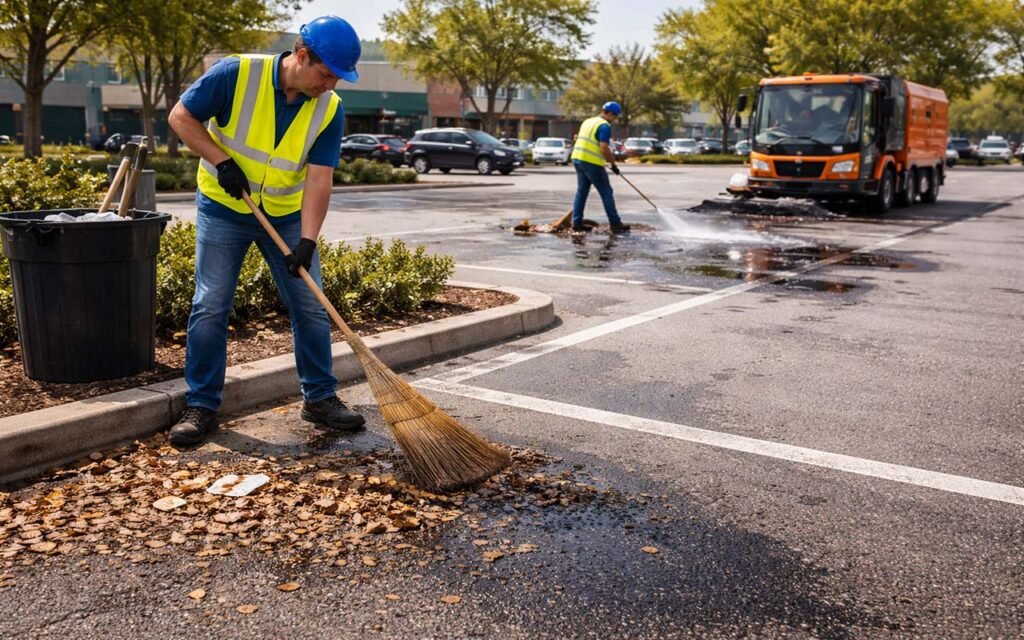
Consistency is key when it comes to parking lot care. A well-maintained parking area not only looks better but also lasts longer and requires fewer costly repairs over time. Property owners who follow a regular maintenance routine often experience fewer structural issues and improved safety conditions.
One of the most important steps is scheduling regular sweeping. Routine sweeping helps remove dirt, debris, and small particles that can build up and damage the surface. Over time, this buildup can trap moisture and lead to cracks or deterioration if not addressed.
It is equally important to address spills immediately, especially oil and chemical leaks. These substances can quickly penetrate asphalt and weaken its structure. Prompt cleaning prevents long-term staining and reduces the risk of surface damage.
Regular inspection of drainage systems is another essential practice. Blocked drains can cause water to pool on the surface, which accelerates wear and increases the chances of cracks forming. Keeping drainage systems clear ensures proper water flow and protects the pavement.
Applying protective seal coatings also plays a major role in long-term maintenance. Sealcoating adds a protective layer that shields the surface from UV rays, moisture, and chemicals. This not only enhances durability but also keeps the parking lot looking clean and well-maintained.
Frequently Asked Questions
What is included in parking lot cleaning services
Parking lot cleaning typically includes sweeping, debris removal, pressure washing, and oil stain treatment. Some services also include drainage cleaning and surface inspections to prevent long-term damage.
How often should a parking lot be cleaned
Most commercial parking lots should be cleaned at least once a week for debris removal and once a month for deep cleaning. High-traffic areas may require more frequent service.
Why is parking lot cleaning important for businesses
Parking lot cleaning helps maintain a professional appearance, improves safety, and extends the life of the pavement. A clean lot also creates a better first impression for customers and visitors.
Can oil stains be completely removed
Yes, most oil stains can be removed using professional degreasers and pressure washing. However, older stains may require multiple treatments depending on how deeply they have penetrated the surface.
How much does parking lot cleaning cost
Costs vary based on the size of the lot, level of dirt, and type of cleaning required. Small properties may cost under $150, while larger commercial lots can cost significantly more.
Is parking lot cleaning environmentally safe
Modern parking lot cleaning methods often use eco-friendly products and proper wastewater management to reduce environmental impact and comply with regulations.
Conclusion
Parking lot cleaning is more than a routine task. It is an essential part of property management that affects safety, appearance, and long-term costs. A clean parking area creates a better experience for customers while protecting your investment.
By using the right methods, maintaining a proper schedule, and addressing issues early, property owners can avoid expensive repairs and maintain a professional image.
If you want reliable results, working with experienced professionals ensures your parking lot stays clean, safe, and durable year-round.