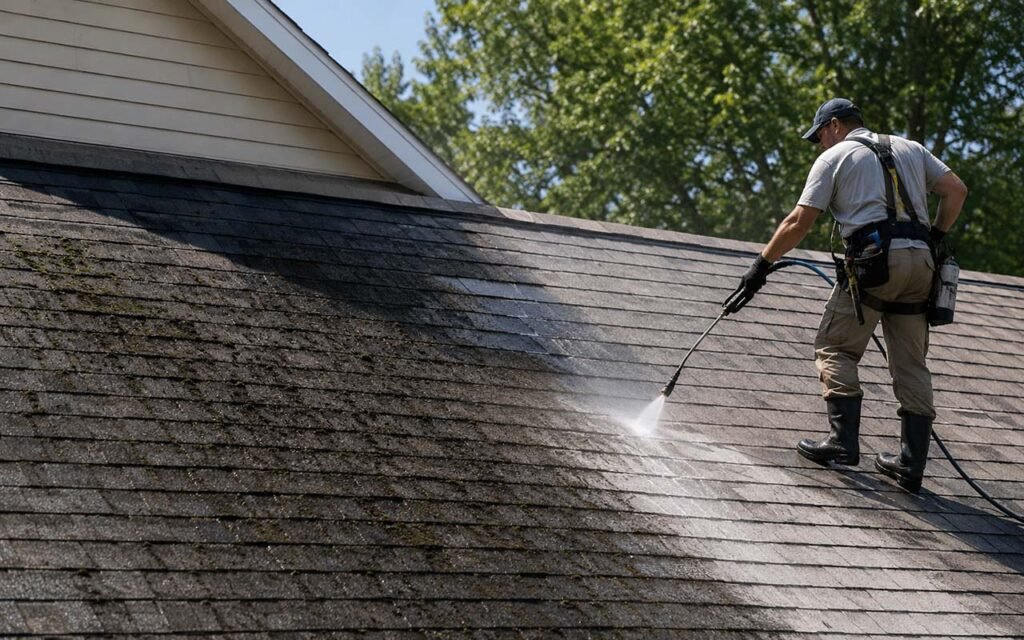
A roof covered in black streaks or moss can make an entire property look neglected. Many homeowners assume the only solution is aggressive pressure washing, but that approach often creates more damage than improvement. A roof soft wash system offers a safer and more effective method for cleaning delicate roofing materials without stripping away protective layers. At 615 Softwash, we have worked on residential and commercial roofs across Nashville and have seen how proper soft washing restores appearance while helping homeowners avoid premature roof repairs.
The demand for roof soft wash system services has grown significantly over the last several years because property owners now understand the risks associated with high-pressure cleaning. Soft washing relies on low-pressure application and specialized cleaning solutions that eliminate algae, mildew, moss, and bacteria at the source. Instead of blasting contaminants off the roof surface, the process treats the root of the problem for longer-lasting results and safer maintenance.
Understanding How a Roof Soft Wash System Works
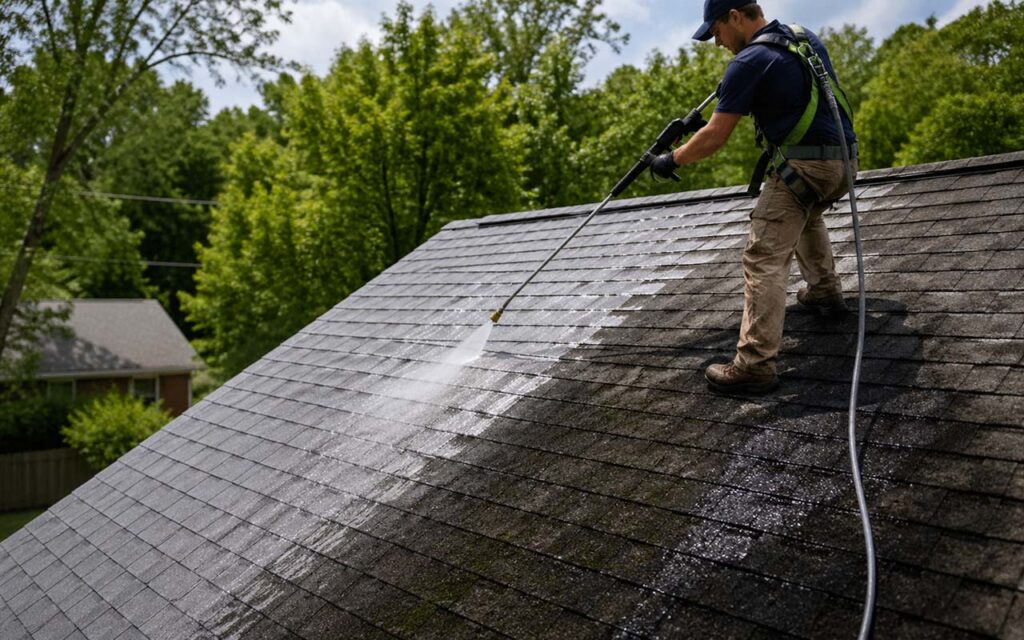
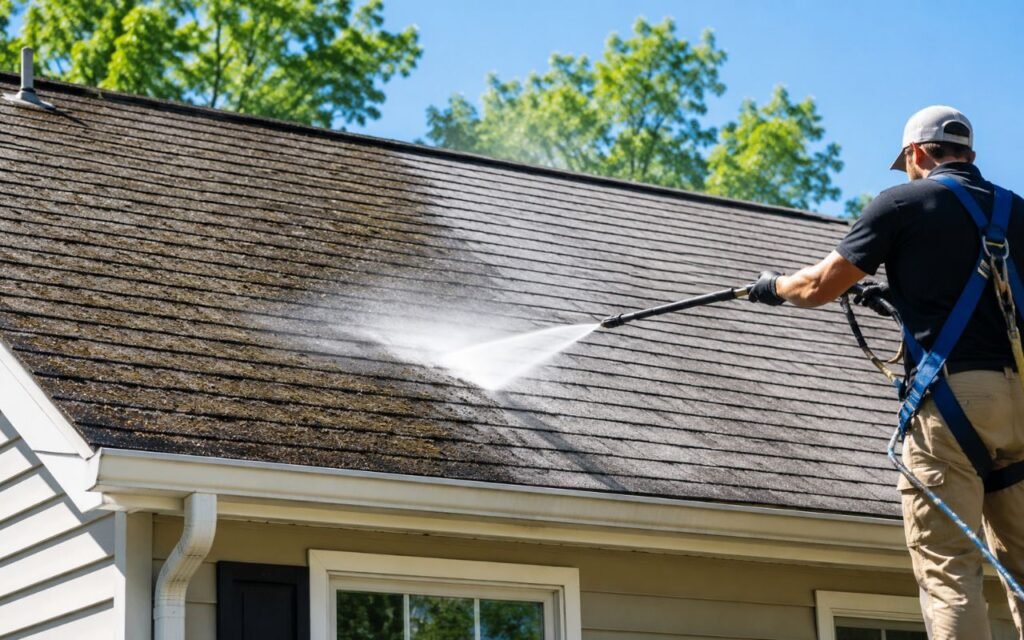
A roof soft wash system uses low-pressure equipment combined with specially formulated cleaning agents to remove biological growth from roofing surfaces. Unlike traditional pressure washing, this process focuses on chemical treatment instead of force. The cleaning solution breaks down algae, mold, moss, and lichen while protecting shingles and roofing materials from damage.
Most modern asphalt shingles are not designed to handle high-pressure water streams. Excessive pressure can remove protective granules that help shield the roof from sunlight and weather exposure. Once those granules are damaged, the roof begins aging much faster. This is one of the main reasons roofing manufacturers often recommend soft washing instead of pressure cleaning.
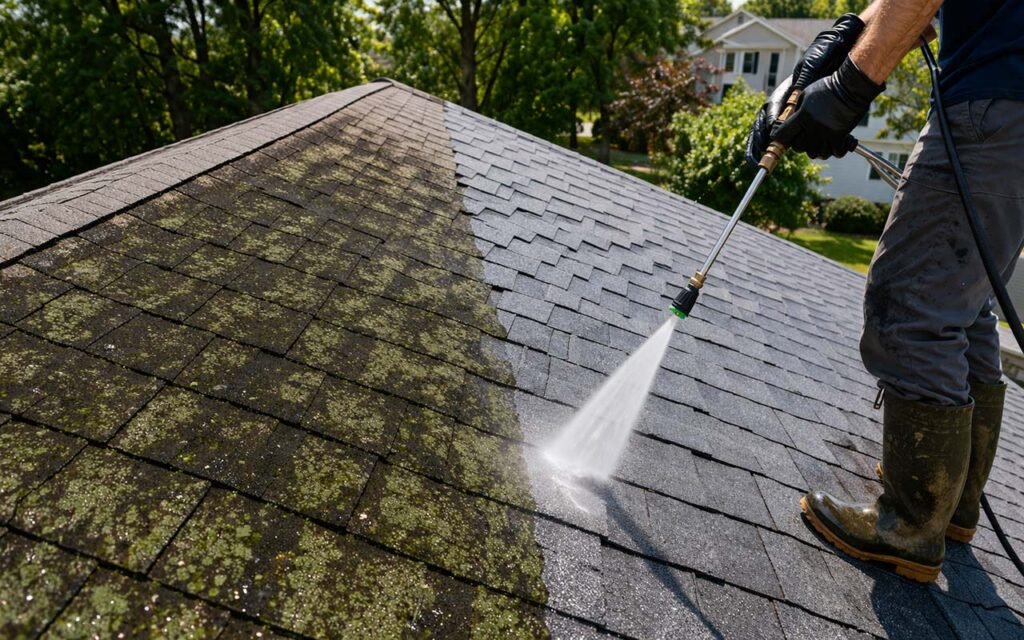
In our field experience, homeowners are often surprised by how quickly the process improves roof appearance. Some roofs begin showing visible improvement within a few hours, while full results continue developing over the next one to two days as the solution continues working naturally.
Why Roof Stains Continue to Return
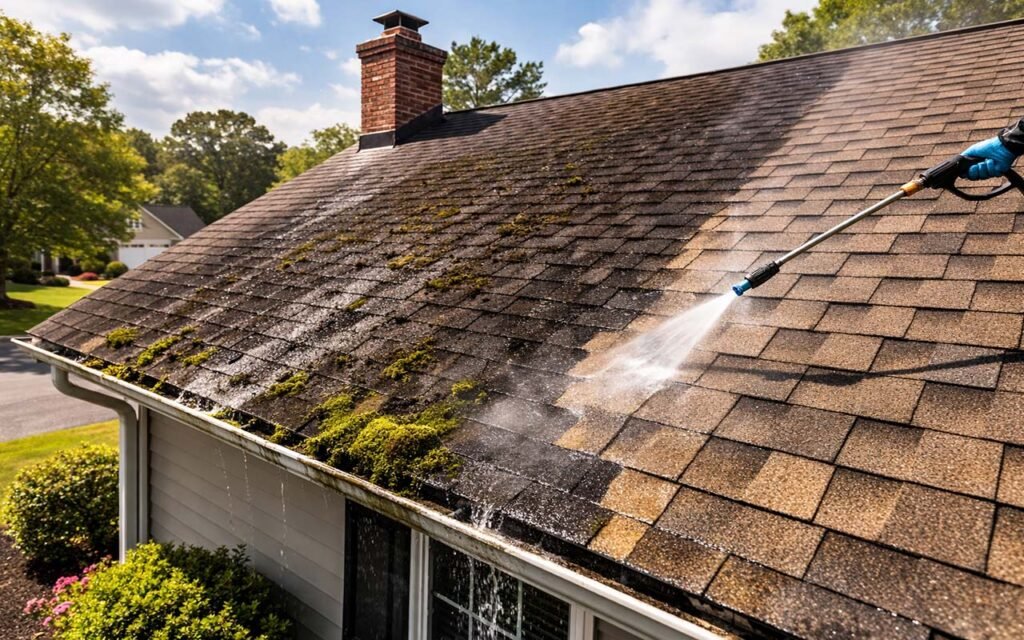
One of the most common roofing problems in humid regions is black algae streaking. These stains are usually caused by Gloeocapsa Magma, a bacteria that feeds on roofing materials and spreads through airborne spores. Many homeowners think the streaks are only dirt, but the issue is biological growth that continues expanding over time.
Pressure washing may temporarily improve appearance, but it rarely eliminates the root source completely. A roof soft wash system kills the organisms directly, which significantly slows regrowth. This is one reason soft washing results typically last much longer than standard surface cleaning methods.
The Nashville climate creates ideal conditions for roof algae growth because humidity, tree coverage, and seasonal rainfall trap moisture on roof surfaces. Homes surrounded by shade often experience faster discoloration than properties with direct sunlight exposure throughout the day.
Key Benefits of Using a Roof Soft Wash System
Soft washing offers several long-term advantages that go beyond appearance improvement. Property owners often choose this cleaning method because it protects roofing materials while delivering longer-lasting results. Based on our hands-on experience, roofs maintained with soft washing typically experience fewer visible deterioration issues over time.
Some of the most important benefits include:
- Safer cleaning for asphalt shingles and tiles
- Reduced risk of roof surface damage
- Longer-lasting results compared to pressure washing
- Improved curb appeal and property appearance
- Removal of algae, mold, mildew, and moss
- Better roof longevity and reduced maintenance needs
Homeowners also appreciate the energy efficiency benefits associated with cleaner roofs. Dark organic buildup absorbs heat more aggressively, which can increase attic temperatures during warmer months. A cleaner roof surface reflects sunlight more effectively and may help improve cooling efficiency.
Roof Soft Wash System vs Pressure Washing
The biggest difference between these two methods is how contaminants are removed. Pressure washing depends on force, while soft washing relies on treatment and controlled application. Understanding this difference is important when selecting the safest cleaning option for your roof.
| Cleaning Method | Water Pressure | Surface Safety | Result Duration | Risk Level |
|---|---|---|---|---|
| Roof Soft Washing | Low pressure | Safe for shingles | Long lasting | Low |
| Pressure Washing | High pressure | Can damage roofing | Short-term | Higher |
This comparison highlights why professional roof cleaning companies increasingly recommend soft washing systems. The process delivers effective cleaning without exposing the roof to unnecessary stress or structural wear.
Common Roofing Materials That Benefit From Soft Washing
A roof soft wash system works effectively on many different roofing materials. Certain surfaces are especially vulnerable to pressure damage, making soft washing the preferred maintenance option. Asphalt shingles remain the most common roofing type treated with this process, but the method also works well on tile, slate, and metal roofing systems.
In our experience, older roofs benefit greatly from low-pressure cleaning because aging materials become more fragile over time. High-pressure methods may loosen shingles or force water underneath roofing components. Soft washing minimizes these risks while still delivering strong cleaning performance.
Tile roofs also respond particularly well to soft washing because moss and algae often grow within small surface crevices. The cleaning solution penetrates these areas more effectively than surface-level washing alone.
How Long Soft Washing Results Typically Last
One of the reasons homeowners invest in professional soft washing is the durability of the results. A properly treated roof often remains cleaner for two to four years depending on weather conditions, tree coverage, and environmental moisture levels.
Several factors affect how long a roof stays clean after treatment:
- Local humidity levels
- Amount of surrounding tree shade
- Roof slope and drainage
- Existing algae severity
- Seasonal rainfall patterns
Homes located in shaded areas usually experience faster organic growth because moisture remains trapped on the surface longer. Preventive maintenance scheduling helps reduce severe buildup and keeps roofs in better condition throughout the year.
According to general maintenance guidance from the National Roofing Contractors Association, routine roof inspections and cleaning can help extend roofing lifespan and reduce repair risks.
Safety Considerations During Roof Cleaning
Roof cleaning should always prioritize both structural protection and worker safety. Professional soft washing companies use specialized equipment and application methods to reduce risks during the cleaning process. At 615 Softwash, we carefully inspect roof condition before beginning any treatment because damaged shingles or loose flashing require additional attention.
Landscaping protection is also an important part of the process. Nearby plants are pre-rinsed and monitored throughout cleaning to reduce exposure to cleaning solutions. Controlled application methods help minimize runoff while maintaining effective treatment coverage.
The Occupational Safety and Health Administration provides important workplace safety guidelines for elevated exterior work through OSHA. Following professional safety standards helps ensure proper handling of equipment and cleaning materials.
Real-World Roof Cleaning Observations From the Field
Over the years, we have cleaned roofs with every level of staining imaginable. One common observation is that homeowners often wait too long before scheduling roof maintenance. By the time algae becomes highly visible from the street, biological growth has usually already spread extensively across the roof surface.
We have also noticed that homes cleaned on a regular schedule tend to experience fewer roofing issues over time. Soft washing removes harmful buildup before it causes deeper deterioration. Preventive maintenance is almost always more affordable than premature roof repairs or replacement.
Another interesting pattern involves north-facing roof sections. These areas usually collect more moisture and sunlight exposure is limited, which creates ideal conditions for algae growth. As a result, staining often appears heavier on those sections first.
Choosing the Right Roof Cleaning Company
Not every exterior cleaning company specializes in soft washing. Choosing an experienced contractor makes a major difference in both safety and final results. Homeowners should ask questions about cleaning methods, equipment, insurance coverage, and roof protection procedures before hiring a company.
A professional roof cleaning provider should be able to explain:
- The difference between soft washing and pressure washing
- How roofing materials are protected during cleaning
- Expected result duration
- Safety procedures used during treatment
- Maintenance recommendations after cleaning
At 615 Softwash, we focus heavily on communication because homeowners deserve clear expectations before any project begins. Proper education helps property owners make informed decisions about roof care and long-term maintenance planning.
Maintaining Roof Condition After Soft Washing
After completing a roof soft wash system treatment, regular maintenance helps preserve the results for as long as possible. Keeping gutters clean and trimming overhanging branches can significantly reduce moisture retention on roofing surfaces. Improved airflow allows roofs to dry more efficiently after rainfall.
We also recommend periodic visual inspections throughout the year. Early signs of algae growth are easier to manage before widespread staining develops. Many homeowners schedule preventive cleanings every few years to maintain appearance and avoid larger restoration issues later.
If you want to learn more about exterior maintenance services, explore additional resources from 615 Softwash including roof cleaning and house washing solutions designed for Nashville properties.
Frequently Asked Questions
How long does a roof soft wash system last?
A professionally applied roof soft wash system can keep a roof clean for two to four years depending on humidity, tree coverage, and weather conditions. Homes surrounded by shade or moisture may need maintenance sooner than properties with direct sunlight exposure.
Is soft washing safer than pressure washing for roofs?
Yes. Soft washing uses low-pressure application methods that are much safer for asphalt shingles, tile roofs, and older roofing materials. Pressure washing can remove protective granules and shorten the lifespan of the roof.
Can roof algae damage shingles over time?
Yes. Algae and moss trap moisture against roofing materials, which can lead to faster deterioration if left untreated. Regular cleaning helps protect the roof surface and maintain its appearance.
How much time does roof cleaning usually take?
Most residential roof cleaning projects take between two and five hours depending on roof size, slope, and buildup severity. Larger commercial properties may require additional time for proper treatment and rinsing.
When should homeowners schedule a roof soft wash system service?
Most homeowners should schedule cleaning every two to three years. If you notice black streaks, moss growth, or discoloration, it may be time to schedule a roof soft wash system treatment before buildup becomes more severe.
Final Thoughts on Roof Soft Wash System Cleaning
A roof soft wash system provides one of the safest and most effective ways to clean modern roofing materials without causing unnecessary wear. The process removes algae, mold, and biological buildup while protecting shingles and improving long-term roof performance. Compared to traditional pressure washing, soft washing delivers longer-lasting results with far less risk of damage.
At 615 Softwash, we have seen firsthand how proper roof cleaning improves curb appeal, extends roof lifespan, and helps homeowners avoid costly maintenance problems. A clean roof is not only about appearance. It also plays an important role in protecting the overall condition and value of a property for years to come.
Good a blog toper