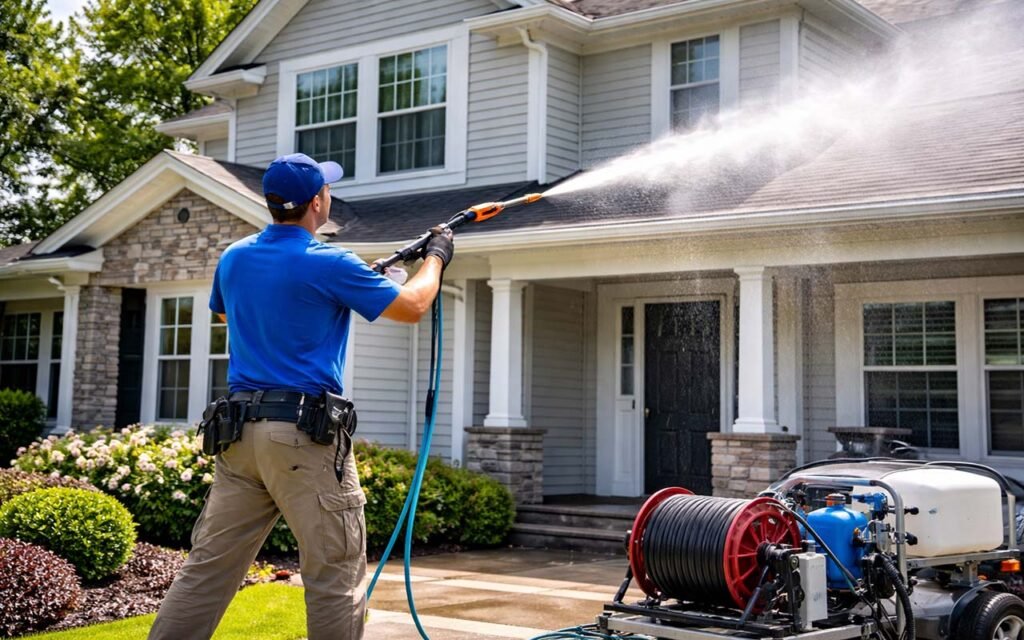
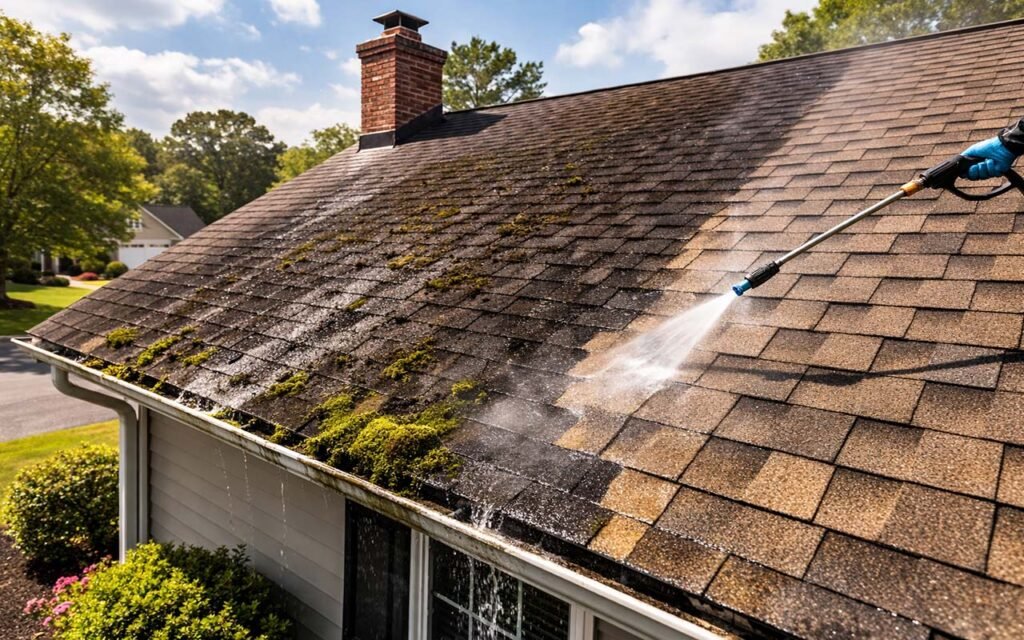
Roof pressure washing is often discussed when homeowners start noticing dark streaks, moss growth, or buildup on their roofs. A roof is constantly exposed to weather, moisture, dust, and organic growth. Over time these elements can leave stains and debris that affect both the appearance and performance of roofing materials.
Many homeowners assume that simply blasting the roof with water will solve the problem. In reality, cleaning a roof requires a careful approach. Different roofing materials respond differently to pressure and chemicals. The method used must remove contaminants while protecting the structure of the roof.
Professionals who work in exterior cleaning understand how to balance pressure, water flow, and cleaning solutions. The goal is to eliminate algae, mildew, and dirt without shortening the life of shingles or tiles. When done correctly, roof cleaning improves curb appeal and helps extend the lifespan of the roof.
In areas like Nashville and Antioch, where humidity and seasonal rainfall are common, roof surfaces often become a breeding ground for algae and moss. Regular cleaning can prevent those organisms from spreading and causing deeper damage.
Why Roof Cleaning Matters for Long Term Roof Health
Roofs are designed to protect homes from the elements, but they also accumulate contaminants that slowly degrade materials. Black streaks that appear on shingles are often caused by a type of algae called Gloeocapsa magma. This organism thrives in warm and humid climates.
When algae and moss remain on a roof for long periods, several issues can develop.
- Moisture retention that weakens shingles
- Gradual breakdown of protective roofing granules
- Increased risk of mold growth in roof cavities
- Reduced energy efficiency due to heat absorption
According to the Asphalt Roofing Manufacturers Association, algae growth is one of the most common reasons roofs develop dark streaks in humid regions.
Over time these biological contaminants trap moisture. Moisture accelerates wear and can shorten the expected lifespan of roofing materials.
Regular maintenance helps reduce these risks. Cleaning the roof removes organic buildup before it becomes embedded in the surface. The National Roofing Contractors Association provides guidance on roof maintenance and inspection.
Common Causes of Roof Stains and Buildup
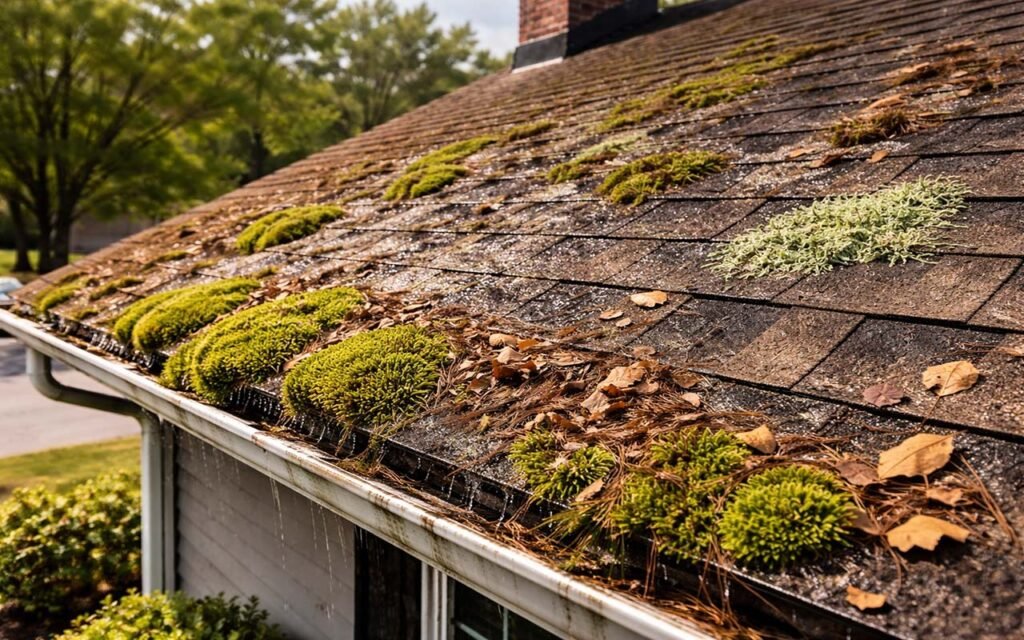
Roof surfaces are constantly exposed to environmental contaminants. These materials settle on the roof and accumulate over time.
The most common causes include
- Algae growth
- Moss and lichen
- Tree pollen and organic debris
- Airborne dust and pollution
- Leaves and standing moisture
In Middle Tennessee, high humidity and tree coverage contribute to faster buildup on roofing surfaces.
Homes surrounded by trees often see moss growth appear within two to four years after a roof installation. Moss retains moisture against shingles, which can eventually cause lifting or cracking.
A professional cleaning approach focuses on eliminating these growths while preserving the structural integrity of the roof.
Roof Pressure Washing vs Soft Washing
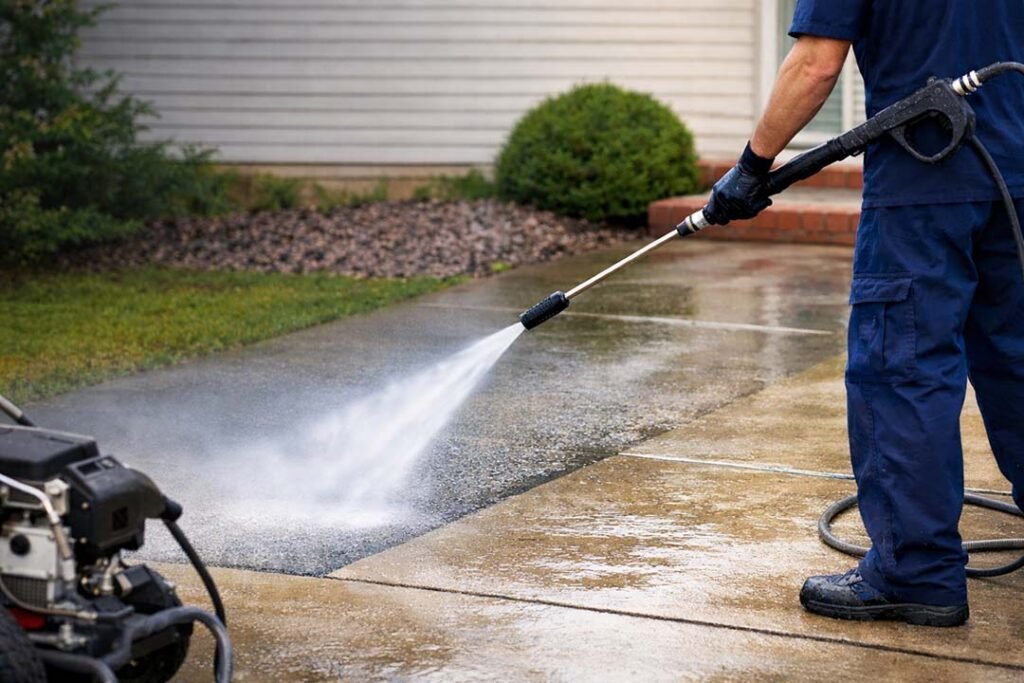
One of the biggest misconceptions homeowners have is that roof cleaning always involves high pressure equipment. In reality, roof pressure washing is rarely performed with the same force used for concrete or driveways.
Professional exterior cleaning companies typically combine low pressure rinsing with specialized cleaning solutions.
Comparison of Roof Cleaning Methods
| Cleaning Method | Water Pressure | Best For | Risk Level |
|---|---|---|---|
| High Pressure Washing | 2000 to 4000 PSI | Concrete and stone surfaces | High risk for roofs |
| Soft Washing | 100 to 500 PSI | Asphalt shingles and delicate roofing | Low risk |
| Chemical Treatment | Minimal pressure | Removing algae and organic growth | Very low risk |
Soft washing has become the preferred method for most residential roofs because it removes biological growth without forcing water under shingles.
The Roof Cleaning Institute of America explains why soft washing is widely recommended for asphalt roofing systems.
Roof Pressure Washing vs Soft Washing
One of the biggest misconceptions homeowners have is that roof cleaning always involves high pressure equipment. In reality, roof pressure washing is rarely performed with the same force used for concrete or driveways.
Professional exterior cleaning companies typically combine low pressure rinsing with specialized cleaning solutions.
Comparison of Roof Cleaning Methods
| Cleaning Method | Water Pressure | Best For | Risk Level |
|---|---|---|---|
| High Pressure Washing | 2000 to 4000 PSI | Concrete and stone surfaces | High risk for roofs |
| Soft Washing | 100 to 500 PSI | Asphalt shingles and delicate roofing | Low risk |
| Chemical Treatment | Minimal pressure | Removing algae and organic growth | Very low risk |
Soft washing has become the preferred method for most residential roofs because it removes biological growth without forcing water under shingles.
When Roof Pressure Washing May Be Appropriate
There are situations where moderate pressure cleaning can be used on certain roofing materials. These situations usually involve durable surfaces such as metal roofs or tile roofs.
Examples include
- Concrete tile roofing systems
- Metal panel roofing
- Clay tiles with heavy dirt accumulation
- Industrial roofing structures
Even in these cases, experienced technicians control pressure carefully. The water stream is adjusted to prevent damage to protective coatings or joints.
For residential asphalt shingles, the cleaning process almost always relies on soft washing instead of traditional pressure washing.
Signs Your Roof Needs Professional Cleaning
Many homeowners do not notice roof contamination until it becomes visually obvious. There are several warning signs that indicate a roof may need attention.
Look for these indicators
- Dark streaks running down roof slopes
- Green patches of moss near shaded areas
- White or gray lichen growth
- Debris buildup in valleys or edges
- Roof surfaces that appear dull or discolored
These signs usually mean algae or organic growth has already established itself.
Cleaning the roof early prevents the problem from spreading to other sections. We provide professional roof cleaning services in Nashville to help homeowners keep their roofs clean and well maintained. Our approach safely removes algae, dirt, and other buildup that can collect over time, improving the appearance of the roof while helping protect its condition.
Real World Observation from Exterior Cleaning Work
In field work across residential neighborhoods, one pattern appears consistently. Homes with north facing roof slopes usually develop algae growth faster than other sections.
Those slopes receive less direct sunlight and stay damp longer after rain. Moisture combined with shade creates ideal conditions for biological growth.
In many cases a homeowner may notice streaks on only one side of the roof. The opposite side may remain relatively clean because it dries faster.
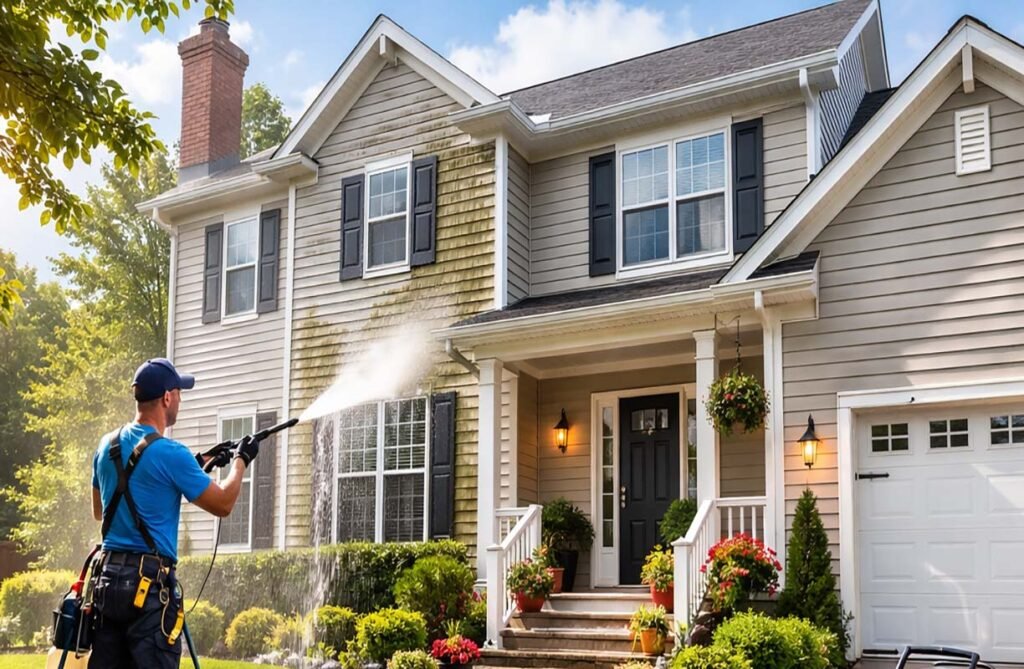
Professional cleaning often restores the roof surface within a few hours, removing years of buildup and revealing the original color of the shingles.
How Professional Roof Cleaning Works
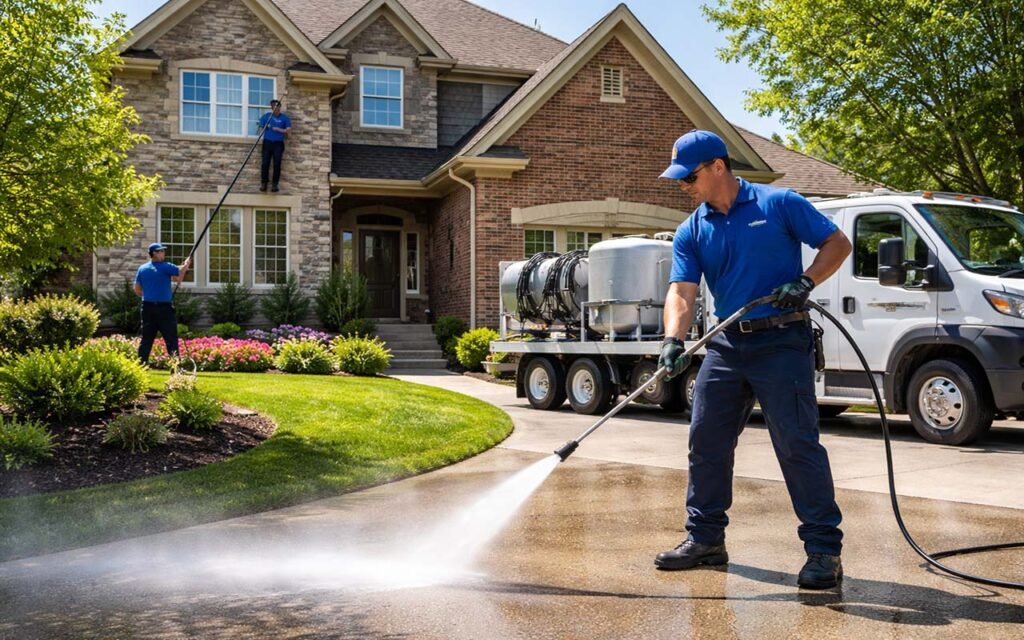
A professional roof cleaning process involves several steps designed to protect the property and deliver consistent results.
Typical steps include
- Inspection of roof materials and condition
- Identification of algae, moss, or staining sources
- Protection of landscaping and surrounding areas
- Application of cleaning solution to break down organic growth
- Low pressure rinse to remove residue and debris
- Final inspection to confirm full coverage
Most residential roof cleaning projects take between two and four hours depending on roof size and contamination level.
Roof Cleaning Performance Data
Exterior cleaning professionals track measurable results during cleaning projects. These numbers help demonstrate how effective the process can be.
| Metric | Typical Value |
|---|---|
| Average roof cleaning time | 2 to 4 hours |
| Algae removal effectiveness | 90 to 99 percent |
| Water pressure used in soft washing | 100 to 500 PSI |
| Typical roof lifespan extension | 5 to 10 years with maintenance |
Regular maintenance prevents contaminants from reestablishing quickly.
Most roofs benefit from cleaning every three to five years depending on environmental conditions.
Safety Considerations During Roof Cleaning
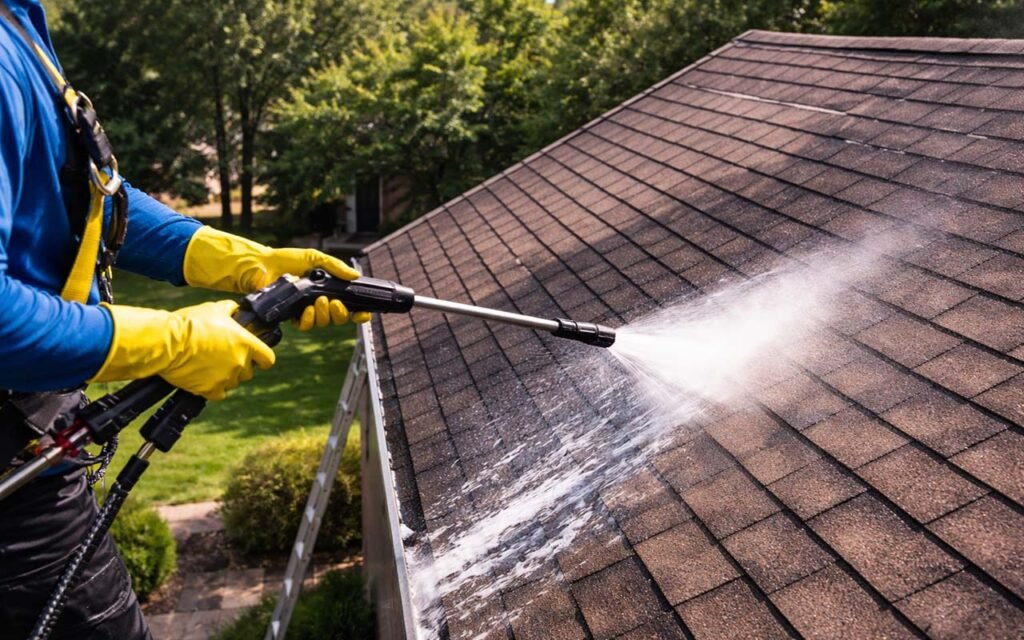
Roof work always involves safety risks. Slippery surfaces, steep slopes, and electrical hazards make professional equipment and training essential.
Professional exterior cleaning teams follow safety procedures such as
- Non slip footwear and roof harness systems
- Controlled ladder placement
- Protective coverings for plants and outdoor furniture
- Water pressure monitoring during cleaning
Homeowners attempting roof cleaning without training can accidentally cause structural damage or personal injury.
Professional services minimize those risks.
Benefits of Regular Roof Maintenance
Maintaining a clean roof offers several advantages beyond improving appearance.
Key benefits include
- Improved curb appeal for the home
- Extended lifespan of roofing materials
- Reduced moisture related damage
- Better roof drainage and water flow
- Lower long term repair costs
Homes with well maintained roofs also tend to perform better during property inspections.
For homeowners planning to sell their property, a clean roof can significantly improve the first impression of the home.
If you need professional roof washing in Nashville, 615softwash provides safe and effective exterior cleaning services. Our team uses proven soft washing methods to remove algae, moss, and buildup without damaging roofing materials. With experience serving Nashville and surrounding areas, 615softwash helps homeowners protect their roofs and maintain long term roof performance.
Roof Cleaning and Energy Efficiency
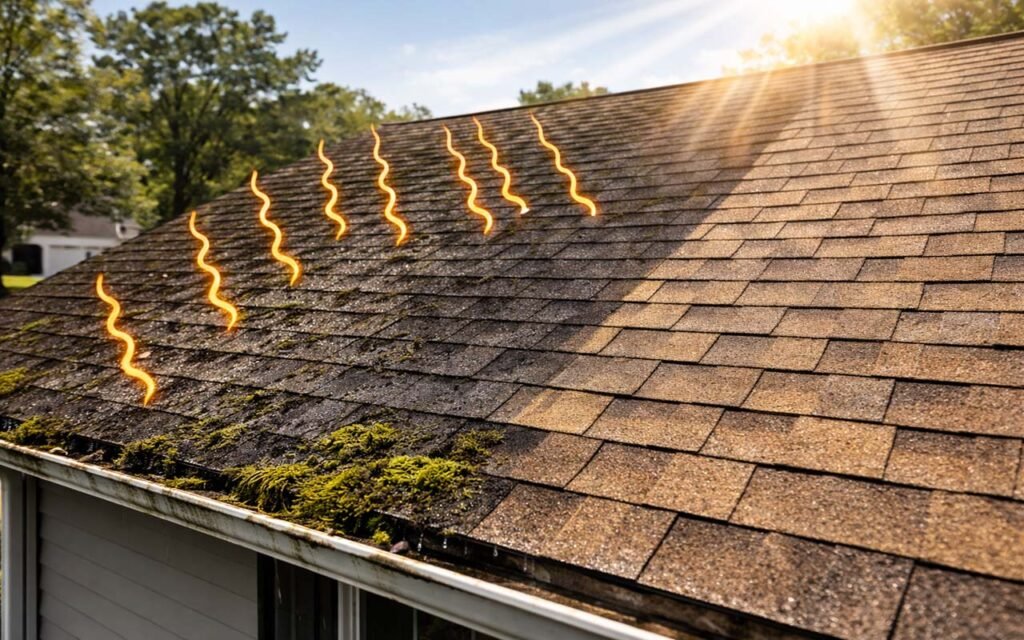
Roof surfaces absorb sunlight throughout the day. When algae or dark buildup covers shingles, the roof can retain more heat.
A darker surface absorbs solar energy more efficiently. That additional heat transfers into the attic space and can increase indoor temperatures.
Removing algae and buildup allows roofing materials to reflect heat more effectively.
This small improvement can reduce cooling demand during hot summer months.
Environmental Factors in Nashville and Middle Tennessee
Climate conditions in Middle Tennessee play a major role in roof contamination.
Several factors contribute to faster buildup
- Humidity levels often above 70 percent during summer
- Frequent rainfall throughout the year
- Tree coverage in residential neighborhoods
- Warm temperatures that promote algae growth
These conditions make roof maintenance particularly important for homeowners in the region.
Without cleaning, algae growth can spread quickly across large sections of roofing.
How Often Should a Roof Be Cleaned
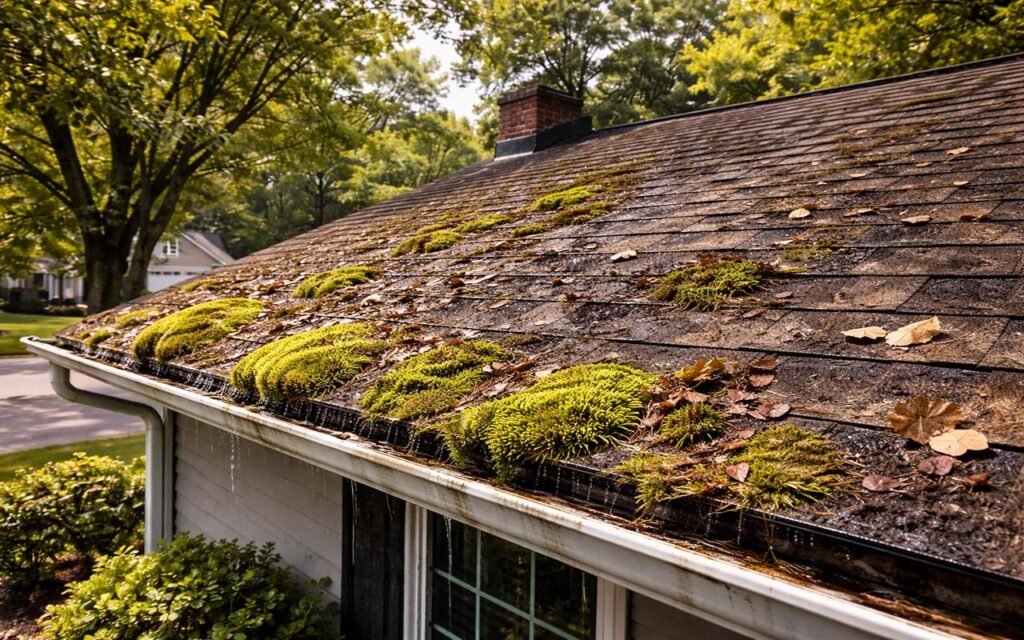
Roof cleaning schedules can vary depending on several environmental and structural factors. A roof is constantly exposed to moisture, debris, and organic growth, so the frequency of maintenance often depends on the conditions surrounding the property. Regular inspections help homeowners determine when buildup is starting to develop and when cleaning may be needed.
One of the most important factors is nearby tree coverage. Homes located near large trees tend to collect more leaves, pollen, and organic debris on the roof. These materials trap moisture and create an ideal environment for algae and moss to grow. When this happens, the roof may require cleaning more often than homes located in open areas with more sunlight.
Roof design also plays a role in how quickly buildup appears. Roof slopes that receive less sunlight tend to stay damp longer after rain. Shaded areas allow algae and moss to spread faster because moisture remains on the surface for longer periods of time.
Local climate conditions are another major influence. In humid regions where rainfall is common, roofs naturally develop algae and mildew faster than roofs in dry climates. Areas with warm temperatures and high humidity levels often require more consistent maintenance to prevent staining and biological growth.
The type of roofing material can also affect the cleaning schedule. Asphalt shingles, metal roofing, and tile roofs all respond differently to environmental conditions. Some materials are more resistant to staining while others allow algae and moss to attach more easily.
Roof age is another consideration. Older roofs may accumulate buildup more quickly because protective coatings and granules gradually wear down over time. Regular cleaning helps preserve the remaining surface protection and keeps the roof functioning properly.
For most homes located in humid environments, cleaning the roof every three to five years provides effective preventative maintenance. Properties surrounded by heavy tree coverage or areas that remain shaded for long periods may benefit from more frequent cleaning to prevent moss and algae from spreading.
Frequently Asked Questions
What is roof washing?
Roof washing is the process of cleaning a roof to remove algae, moss, mold, dirt, and other buildup that develops over time. Professional roof washing uses specialized cleaning solutions and controlled water pressure to safely remove stains while protecting roofing materials. Regular roof cleaning helps maintain the appearance of the home and can extend the life of the roof.
How much does roof washing cost?
The cost of roof washing depends on factors such as roof size, material type, accessibility, and the level of algae or moss buildup. For most residential homes, professional roof cleaning typically ranges from about 300 to 800 dollars. Larger roofs or heavy contamination may increase the cost due to additional cleaning time and treatment.
What is soft washing a roof?
Soft washing a roof is a cleaning method that uses low pressure water combined with specialized cleaning solutions to remove algae, mold, mildew, and organic stains. Instead of relying on high pressure, the solution breaks down contaminants so they can be rinsed away safely. This method is widely recommended for asphalt shingle roofs.
How much is roof power washing?
Roof power washing costs vary depending on the size of the roof, its condition, and the cleaning method required. On average, homeowners may pay between 350 and 900 dollars for professional roof cleaning. However, many exterior cleaning professionals prefer soft washing because it is safer for most residential roofing materials.
Final Thoughts
Roof pressure washing is often misunderstood. While pressure cleaning plays a role in certain roofing systems, most residential roofs require a gentler approach to prevent damage.
Professional roof cleaning focuses on removing algae, moss, and organic buildup while protecting the integrity of roofing materials. The right technique restores the appearance of the roof and helps extend its lifespan.
In humid environments like Nashville and Antioch, roofs naturally accumulate biological growth over time. Regular cleaning prevents that buildup from causing deeper damage and keeps the property looking well maintained.
Understanding how roof cleaning works helps homeowners make informed decisions about maintenance and property care. When handled properly, the process is safe, efficient, and highly effective at restoring the appearance of a home.